
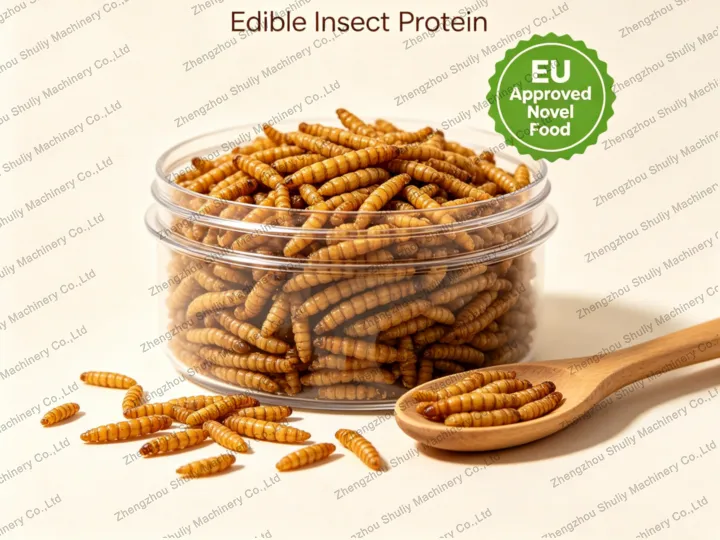
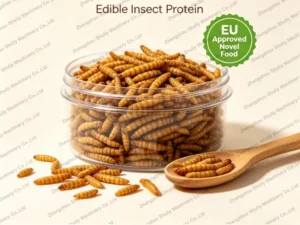
On 1 June 2021, the European Commission opened the door to insect-based food in the EU by adopting Commission Implementing Regulation (EU) 2021/882, authorizing dried yellow mealworm (Tenebrio molitor larva) as a novel food. Since then, two further Implementing Regulations — (EU) 2022/169 and (EU) 2025/89 — have expanded the permitted forms. For European and export-oriented mealworm processors, these three regulations are now the backbone of any commercial insect-protein line.
This article walks through each of the three authorizations in order, summarizes what they actually permit, and explains the upstream production requirements that the European Food Safety Authority (EFSA) and the European Commission expect to see in a compliant mealworm processing line — the same line of equipment that Shuliy’s mealworm separators, microwave dryers and oil extraction machines are already designed to support.
Why this matters for mealworm processors and equipment buyers
Before 2021, no whole-insect product could legally be marketed for human consumption anywhere in the European Union under Regulation (EU) 2015/2283 on novel foods. EFSA’s scientific opinions, combined with the Commission’s Implementing Regulations, have changed that. For B2B equipment buyers and integrators, the practical impact is three-fold:
- Upstream farming must be in a closed, controlled environment on GMP+-certified or equivalent feed — this affects how screening and separation equipment must be designed for traceable batch handling.
- Processing must reach defined microbiological and contaminant thresholds — drying lines, pupa/larva separation, and adult/larva separation must be repeatable at industrial scale, not manual.
- End-product forms are tightly defined — whole dried, frozen, paste, powder, and UV-treated powder each come with their own labelling and traceability rules.
For Shuliy’s existing and prospective customers, this means the equipment they buy today must already be regulation-ready — not just throughput-ready. Below, we walk through each of the three Implementing Regulations in chronological order.
Commission Implementing Regulation (EU) 2021/882 of 1 June 2021 was the EU’s first authorization of an insect as a novel food. It permitted the placing on the market of dried yellow mealworm larvae (Tenebrio molitor) as a novel food, based on EFSA’s scientific opinion adopted on 7 July 2021.
Field EU 2021/882 Adopted 1 June 2021 (entered into force 20 days after publication) Insect species Tenebrio molitor larva (yellow mealworm) Permitted form Dried whole larva (heat-treated, freeze-dried whole, or powder) First exclusive authorization holder Fair Insects BV (data-protected for 5 years) EFSA opinion date 7 July 2021 (NDA Panel) Official Journal reference CELEX 32021R0882
EFSA’s underlying assessment concluded that the dried yellow mealworm formulations were safe under the proposed uses, provided the larvae were reared on substrates that comply with EU feed regulations and processed to control microbiological and chemical contaminants. The Commission formally added the authorized dried forms to the Union list of novel foods in Implementing Regulation (EU) 2017/2470.
What EU 2021/882 means for your mealworm processing line
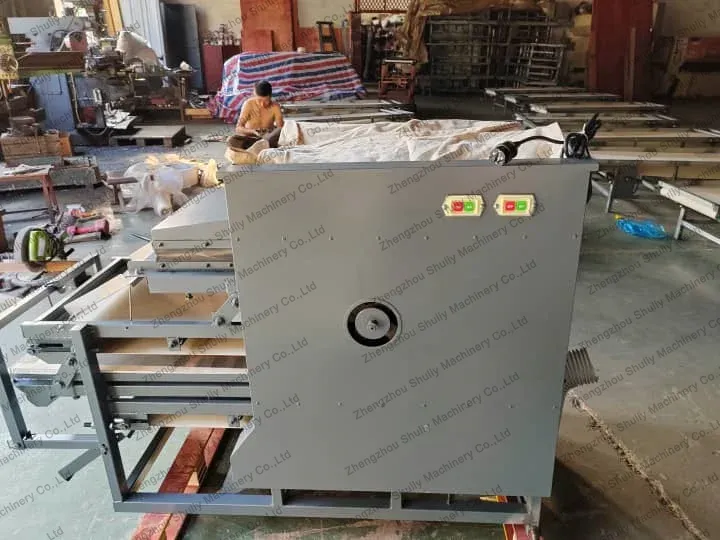
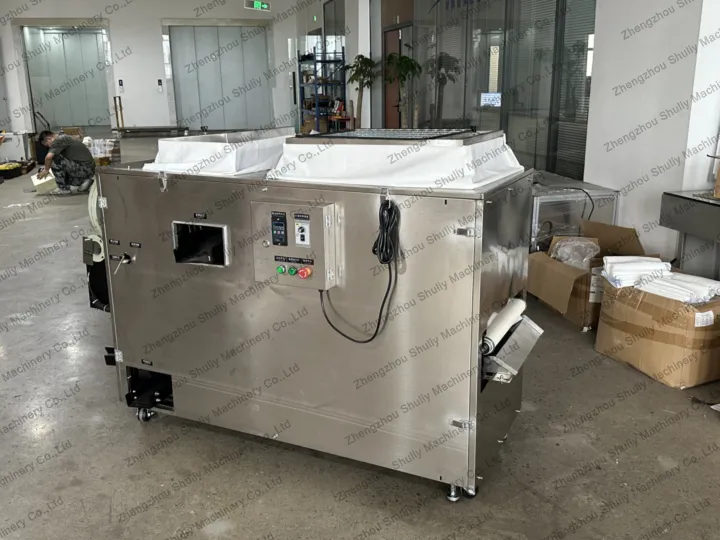
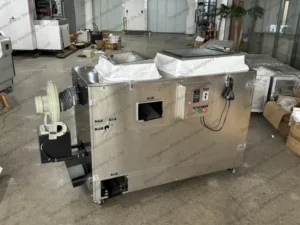
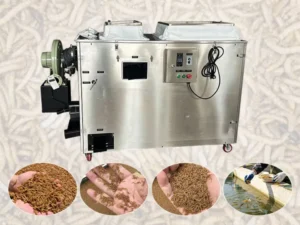
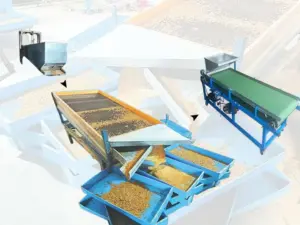
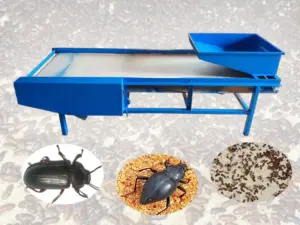
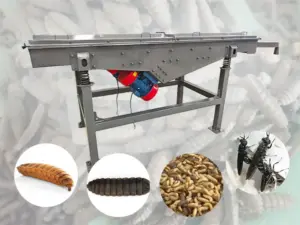
- Your larva–pupa separator must reliably remove dead larvae, pupae, exuviae and frass before drying — Shuliy’s SL-5 and SL-11 lines are designed for exactly this pre-drying sort.
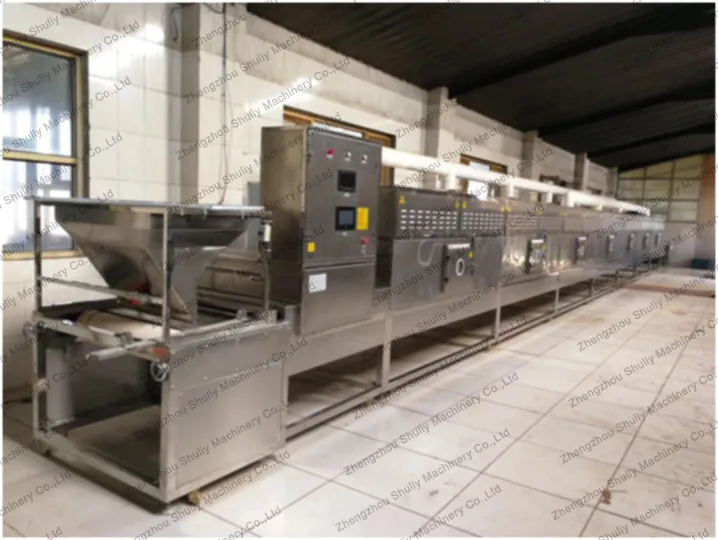
- Drying must reach moisture levels low enough to control microbial load (typically below 6% for shelf-stable products). Shuliy’s στεγνωτήριο μικροκυμάτων holds the larva at under 6% moisture while retaining a golden color and protein integrity.
- Substrate and feed must be traceable. Processors should keep batch records linking incoming larvae (with batch IDs from upstream farms) to final dried product lot numbers.
Regulation 2 — EU 2022/169 (8 February 2022): frozen, paste, dried and powder forms
Less than a year after the first authorization, the Commission adopted Commission Implementing Regulation (EU) 2022/169 of 8 February 2022, authorizing the placing on the market of frozen, paste, dried and powder forms of yellow mealworm ( Tenebrio molitor ) larva as a novel food. This second regulation was driven by a new application that broadened the scope beyond whole dried larva, and added it to the Union list of novel foods in Implementing Regulation (EU) 2017/2470.
Field EU 2022/169 Adopted 8 February 2022 Permitted forms Frozen (whole, thermally processed), paste, dried (whole or powdered) Scope expansion vs. 2021/882 Adds frozen and paste forms for the first time; pre-existing dried forms continue under 2021/882 Official Journal reference CELEX 32022R0169
The practical effect is that processors can now legally sell frozen mealworm larva to retail and foodservice channels inside the EU, and use the same upstream sorting and drying equipment for multiple product formats. The Commission’s amendments to Regulation (EU) 2017/2470 updated the Union list accordingly.
What EU 2022/169 means for your worm processing line
- You can now switch between frozen, paste, dried and powder outputs from the same upstream sorting + washing station — provided the line is hygienic (stainless steel contact surfaces) and traceable. Shuliy’s 11th-generation SL-11 separator is built with 201 stainless steel contact parts and a snap-fit panel design for fast sanitation.
- For frozen-form processors, chilling/freezing capacity becomes part of the audit trail — batch-to-freezer dwell time and freezer temperatures are now regulator-relevant.
- Paste and powder lines benefit from the same microwave drying preconditioning, then a milling step not covered by Shuliy equipment.
Regulation 3 — EU 2025/89 (20 January 2025): UV-treated powder, the third wave
On 20 January 2025, the Commission adopted Commission Implementing Regulation (EU) 2025/89 , authorizing the placing on the market of UV-treated powder of whole Tenebrio molitor larvae (yellow mealworm) as a novel food, and amending Implementing Regulation (EU) 2017/2470 to add it to the Union list. EFSA’s NDA Panel had adopted its underlying scientific opinion on 28 March 2023.
Field EU 2025/89 Adopted 20 January 2025 Insect species Tenebrio molitor larva (whole) Permitted form UVB-treated powder (whole larvae, thermally processed, ground, UVB-treated) Applicant (data-protected) NutriÉarth — exclusive 5-year data protection from publication Permitted food categories Bread & rolls, cakes, pasta, processed potato products, cheese & cheese products, fruit/vegetable compotes EFSA opinion date 28 March 2023 (NDA Panel) Official Journal reference CELEX 32025R0089
UVB treatment is a microbial-load reduction step added after thermal processing and grinding. EFSA’s safety assessment concluded that UV-treated whole mealworm powder is safe within the specified maximum use levels and food categories. For processors, this opens a new high-value product stream — a powder ingredient that can be incorporated directly into bakery, pasta, dairy and snack matrices.
What EU 2025/89 means for your processing line
- The upstream line still ends at a dry, whole larva — the same end-point as 2021/882 — and only then enters the UV-treatment chamber and mill. Shuliy’s microwave dryer delivers exactly the dry-whole-larva feedstock this authorization assumes.
- UV-treatment equipment is not in Shuliy’s scope (it is post-drying microbial reduction hardware) — processors integrating this regulation typically contract the UVB chamber separately.
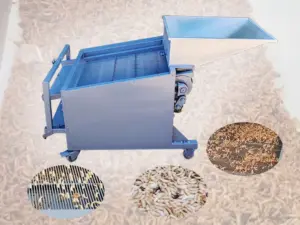
- Maximum use levels per food category must be respected, which means ingredient-line batching and metering become quality-control steps. Shuliy’s sifter line supports upstream grading that feeds consistent particle size to the mill.
Regulation Adopted Permitted forms EFSA opinion Data-protected applicant EU 2021/882 1 June 2021 Dried whole larva 7 July 2021 Fair Insects BV EU 2022/169 8 February 2022 Frozen, paste, dried, powder Pre-2022 — EU 2025/89 20 January 2025 UV-treated powder of whole larva 28 March 2023 NutriÉarth (5 years)
Taken together, the three authorizations give European processors a complete product family: frozen, paste, dried, powder and UV-treated powder — all from the same insect, all under the same Union list.
Common upstream requirements across all three regulations
Although each Implementing Regulation has its own specifications, the upstream requirements are consistent and apply to any processor selling into the EU market. Drawing from the three regulations and EFSA’s opinions, the typical audit-ready checklist looks like this:
- Closed-environment rearing on substrate compliant with EU feed rules (GMP+ or equivalent).
- Traceable batch records from incoming substrate and larvae to finished product lot.
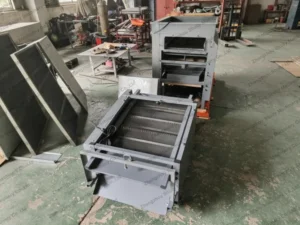
- Removal of dead larvae, pupae, exuviae and frass before processing — usually via a vibratory mealworm sifter.
- Thermal processing to defined temperature/time combinations; for the powder route, an additional UVB step is required under 2025/89.
- Microbiological and contaminant control meeting Regulation (EC) 1881/2006 limits for heavy metals, mycotoxins, and pesticide residues.
- Allergen labelling — mealworm is a recognized allergen and must be declared on prepacked foods under Regulation (EU) 1169/2011.
Shuliy’s SL-11, SL-6 and SL-5 sorting lines, combined with the continuous microwave dryer, deliver the closed-loop, stainless-steel-contact, batch-traceable upstream that EU auditors expect to see.
What buyers of mealworm processing equipment should ask vendors in 2026
If you are specifying a new line or upgrading an existing one, the three regulations effectively set the minimum functional specification. Before you buy, ask each vendor these questions:
- Does the separator use food-grade stainless steel (201/304) for all larva-contact parts? — Required for EU 2022/169 frozen forms.
- Can the dryer reach and hold moisture below 6% with documented batch records? — Required for EU 2021/882 and EU 2025/89.
- Does the line support batch-level traceability (one batch ID from rearing to final product)? — Required across all three regulations.
- Can the line be configured for 220V / 380V / 415V to match European site supply? — Required for export.
- Does the vendor provide CE declaration of conformity and full technical documentation for EU customs clearance?
Shuliy’s standard CE-marked equipment answers all five. For a side-by-side comparison, see the tenebrio molitor sorting machine guide and the microwave dryer page.
Sources & official references
- Commission Implementing Regulation (EU) 2021/882 of 1 June 2021 — Official Journal of the European Union: CELEX 32021R0882.
- Commission Implementing Regulation (EU) 2022/169 of 8 February 2022 — Official Journal of the European Union: CELEX 32022R0169.
- Commission Implementing Regulation (EU) 2025/89 of 20 January 2025 — Official Journal of the European Union: CELEX 32025R0089.
- EFSA NDA Panel scientific opinion on the safety of frozen and dried formulations from whole yellow mealworm: EFSA 6778.
- Union list of novel foods — Commission Implementing Regulation (EU) 2017/2470, current consolidated version: DG SANTE novel foods page.
- Regulation (EU) 2015/2283 on novel foods — base regulation: CELEX 32015R2283.
Last reviewed: 15 September 2026. This article is informational only and does not constitute legal advice. Always consult the official EU sources above and a qualified food-law advisor before placing novel food products on the EU market.
Talk to Shuliy about a regulation-ready mealworm line
If you are planning a European, Australian or North American mealworm line and want equipment that is already aligned with EU 2021/882, 2022/169 and 2025/89, send us your target monthly output, substrate source and target end-form (frozen / paste / dried / powder / UV-treated powder). We will reply with a sizing proposal and a CE documentation package.

 English
  Español
  Français
  العربية
  Русский
  简体中文
简体中文  Português
  Kiswahili
  Ελληνικά
  Türkçe
  فارسی
فارسی  اردو
اردو  हिन्दी
  한국어
한국어  日本語
日本語  Tiếng Việt
  Bahasa Indonesia
  Bahasa Melayu
  ไทย
ไทย