
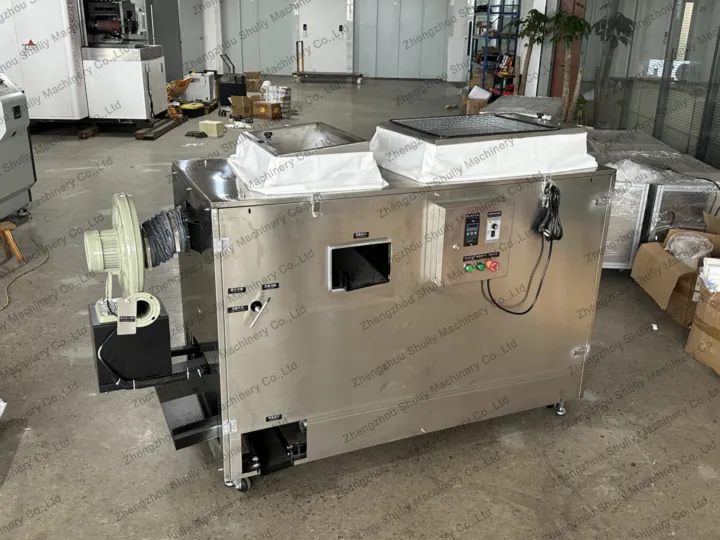
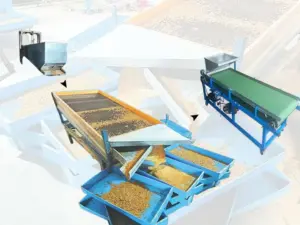
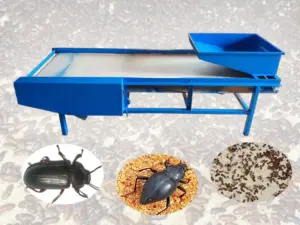
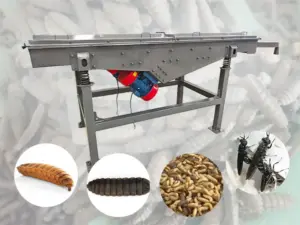
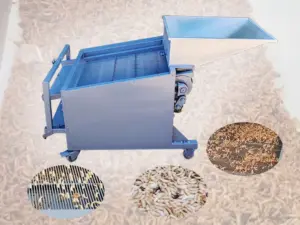
An Australian commercial mealworm farm transformed its post-harvest processing line by integrating Shuliy’s 10th-generation mealworm sifting machine, along with a full set of breeding trays and sifting trays.
The upgrade took the operation from labor-bound manual sorting to a continuous, automated workflow capable of 300 kg/h on partial-function runs and 150 kg/h on full multi-stage separation.
Here is how the deployment played out in real conditions.
The Challenge: Manual Sorting Held Back a Growing Operation
Before the upgrade, the farm relied on a hand-screening workflow to separate live larvae from pupae, dead worms, and frass (worm manure). The team faced four recurring bottlenecks:
- Low per-person throughput — Manual sorting topped out at roughly 20–40 kg per worker per hour
- Inconsistent grading accuracy — Visual sorting produced uneven size separation and missed pupae
- Heavy labor dependency — Output scaled only by adding headcount, which is difficult in regional Australia
- Cross-contamination risk — Open trays allowed frass dust to spread between breeding batches
As wholesale orders from pet food and aquaculture feed buyers grew, the farm needed a single machine that could handle all four separation functions in one pass, without requiring multiple operators.
The Solution: SL-10 10th-Generation Sifting System
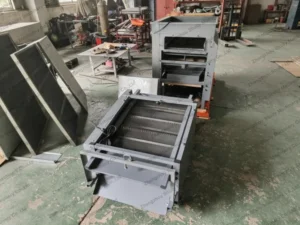
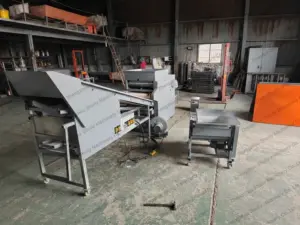
The farm selected Shuliy’s 10th-generation mealworm sifting machine, bundled with purpose-built breeding trays and matching sifting trays to standardize the upstream and downstream flow.
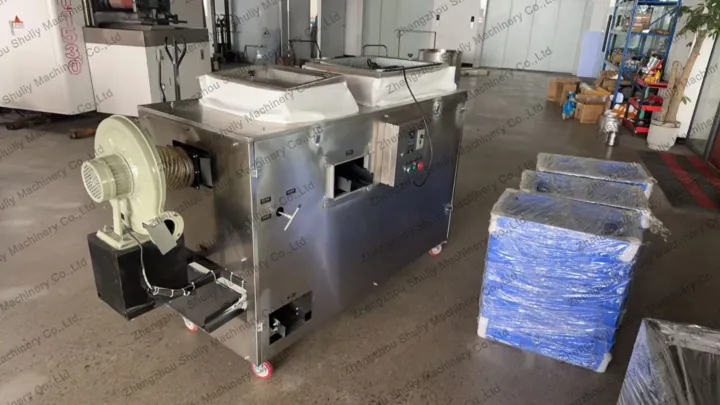
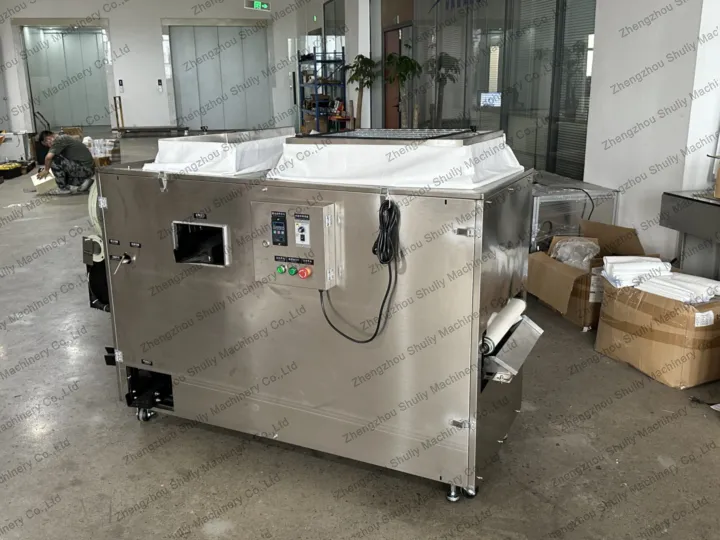
SL-10 Technical Specifications
| Pic | Spec | QTY |
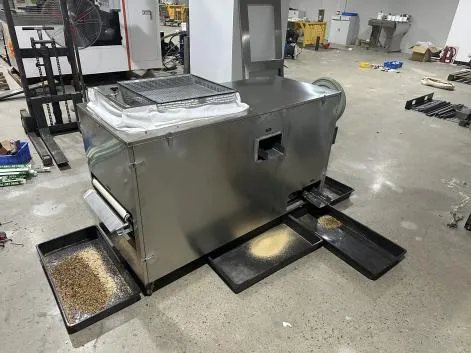 | Mfano: SL-10 Voltage: 220v/50hz Nguvu: 0.85kw Full-featured output: 150kg/h Output of some functions: 300kg/h Uzito wa jumla: 300kg Machine Size: 2210x1450x900mm One chrysalis sieve: 3.8*25mm One worm manure sieve: 1.0*1.0mm One large and medium worm screen: 2*25mm One small and medium worm sieve: 1.5*25mm | seti 1 |
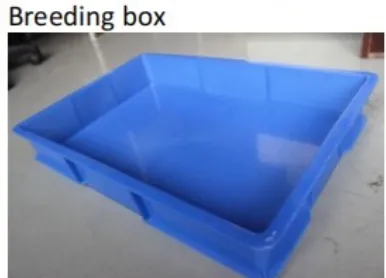 | 600*400*10mm | 24 pcs |
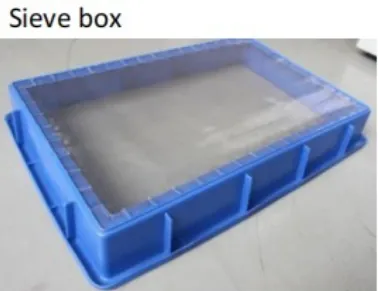 | 570*370*90mm | 24 pcs |
Why Four Interchangeable Sieves Mattered
The SL-10 mealworm sifting machine ships with four purpose-tuned sieves, each solving a specific separation problem in a single pass:
- Chrysalis sieve (3.8 × 25 mm) — Lifts intact pupae before they reach the vibratory stage, reducing damage to the most fragile product
- Worm manure sieve (1.0 × 1.0 mm) — Captures fine frass dust, returning clean manure as a sellable by-product for fertilizer buyers
- Large & medium worm screen (2 × 25 mm) — Sorts market-grade larvae from undersized stock
- Small & medium worm sieve (1.5 × 25 mm) — Final grading pass for buyers requiring tighter size bands
The Results: From 30 kg/h to 300 kg/h
| Metric | Before (Manual) | After (SL-10) | Improvement |
| Sorting Throughput | 20–40 kg/h per worker | 300 kg/h (partial) | +750% |
| Full Multi-Stage Output | Not possible manually | 150 kg/h | New capability |
| Operators Required | 3–4 workers per shift | 1 operator | −75% labor |
| Separation Accuracy | ~85–90% | ~99% | +9–14% |
| Working Days per Batch | 2–3 days | Same-day processing | ~70% time saved |
Within the first month, the farm doubled its weekly output without hiring additional sorters. The 0.85 kW motor — small enough to run on a standard Australian single-phase 220V outlet — kept energy costs minimal even at the 300 kg/h partial-function ceiling.
Bundled Hardware: Breeding Trays and Sifting Trays
The customer also purchased Shuliy’s breeding trays and sifting trays as part of the same shipment. Pairing standardized trays with the SL-10 closed the loop between raising and sorting:
- Uniform tray dimensions let the SL-10’s vibratory bed load directly from the breeding stack, eliminating manual transfer
- Sifting trays downstream caught residual fines before packaging, lifting final product purity
- Stackable design reduced floor space, freeing room for additional breeding racks
Customer Feedback
"The SL-10 mealworm sifting machine hits 300 kg/h on the first full shift, which is more than our previous crew could process in a full day. The four-sieve setup means we no longer run the material through multiple machines, and the breeding trays from Shuliy drop straight onto the conveyor. It has changed how we plan our weekly capacity.”
— Operations Manager, Australian mealworm farm
Is the SL-10 Right for Your Operation?
The 10th-generation SL-10 fits medium-to-large mealworm operations that need multi-function separation in a single compact machine, with a 220V single-phase supply.
If your throughput target sits above 300 kg/h or you run shifts longer than 8 hours, the newer 11th-generation SL-11 is the next step up, with a built-in dust collection system and CE certification for European and North American buyers.
Contact Shuliy to discuss sizing, voltage configuration, and bundled tray packages for your specific production volume.

 English
  Español
  Français
  العربية
  Русский
  简体中文
简体中文  Português
  Kiswahili
  Ελληνικά
  Türkçe
  فارسی
فارسی  اردو
اردو  हिन्दी
  한국어
한국어  日本語
日本語  Tiếng Việt
  Bahasa Indonesia
  Bahasa Melayu
  ไทย
ไทย